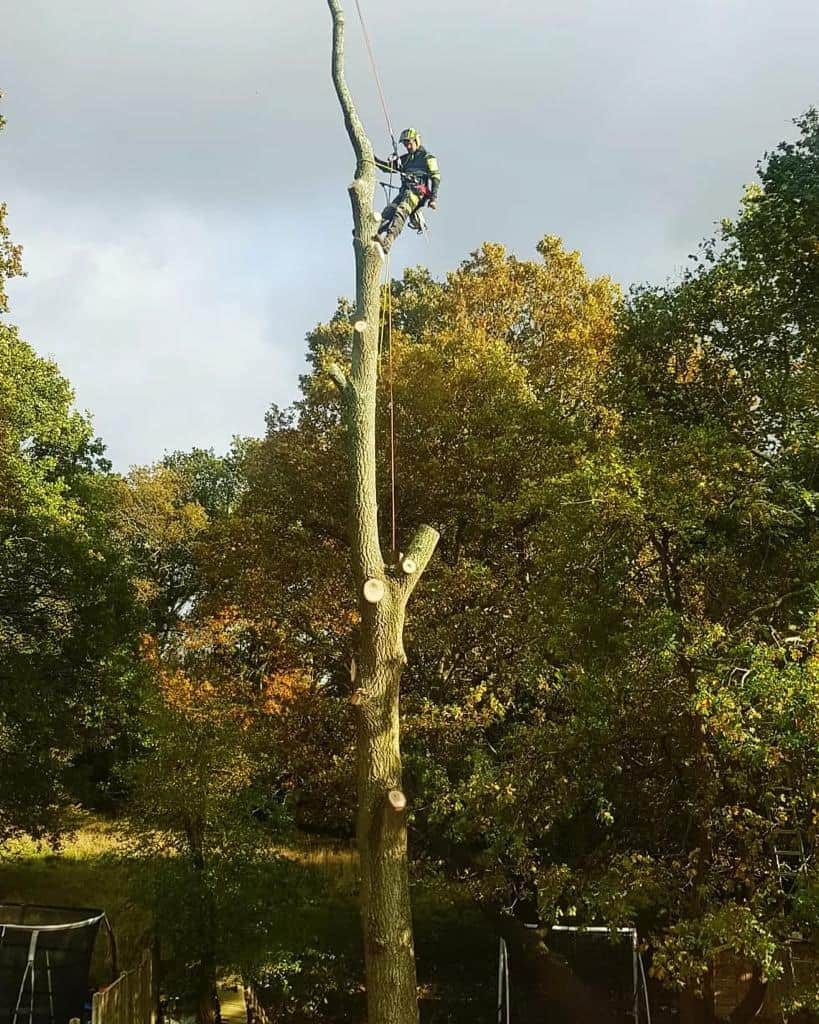
Mature trees can provide shade, character and valuable structure within a garden. However, as they continue to grow, their size and changing condition may create practical concerns. Branches can extend towards buildings, deadwood may develop within the canopy, and earlier damage can become more significant over time.
Professional tree surgery can help keep mature trees healthy and manageable by addressing specific structural and growth-related issues. The aim is not simply to make a tree smaller, but to apply suitable work that respects its age, species, condition and natural form.
How Tree Surgery Supports Mature Trees
A mature tree often responds differently to pruning than a young, actively developing tree. Large cuts and excessive canopy removal can place it under unnecessary stress, so any work should be carefully planned.
Professional tree surgery begins with an assessment of the tree as a complete structure. This includes examining the trunk, major branch unions, canopy, visible root area and relationship with the surrounding property.
Removing Dead and Damaged Branches
Deadwood develops naturally within many mature trees. Small dead twigs may present little concern, but larger branches can become brittle and eventually fall.
Signs of dead or declining branches may include:
- Missing leaves during the growing season
- Dry or peeling bark
- Brittle outer twigs
- Cracks at branch unions
- Fungal growth
- Sections of canopy that appear unusually sparse
- Broken branches suspended within surrounding growth
Professional deadwood removal targets these branches while retaining healthy parts of the canopy. This can improve safety around frequently used areas and make future inspection easier.
Managing Excessive Canopy Spread
As a tree matures, its branches may extend over roofs, paths, driveways or other parts of the garden. Suitable pruning can create clearance without unnecessarily reducing the entire canopy.
The work may involve shortening selected branches back to appropriate growth points. Allowance should be made for future development so that the same conflict does not return immediately.
This selective approach is generally more beneficial than indiscriminate cutting, which can leave large wounds and encourage dense, weakly attached regrowth.
Improving an Unbalanced Structure
A mature tree may become uneven because of restricted growing space, exposure to weather, previous branch loss or poor pruning. A heavily extended limb can place additional leverage on its attachment, particularly when carrying dense foliage.
Careful reduction may help redistribute weight and improve the overall balance of the canopy. However, visual asymmetry does not automatically mean a tree is unsafe. Its structure must be assessed before deciding whether intervention is necessary.
The objective should be to retain a natural form while reducing specific areas of excessive weight or spread.
Reducing Overcrowded Growth
Crossing and rubbing branches can damage each other as they move in the wind. Dense internal growth may also conceal defects and make the canopy more difficult to inspect.
Selective pruning can remove unsuitable branches and improve the distribution of the remaining growth. Work should be limited to what the tree can reasonably tolerate, as excessive thinning may expose previously sheltered limbs and alter how wind passes through the canopy.
A mature tree rarely benefits from having large quantities of healthy foliage removed without a clear reason.
Responding to Storm Damage
High winds can crack limbs, weaken branch unions and leave broken material caught within the canopy. Not all damage is obvious from ground level, particularly when foliage conceals the affected area.
Following severe weather, professional assessment may be appropriate if there are:
- Freshly broken branch ends
- Hanging or suspended limbs
- New cracks in major branches
- Sudden changes in canopy shape
- Branches resting on nearby structures
- Increased movement at a branch union
- Debris beneath the tree
Damaged branches can then be removed or reduced in a controlled manner, with surrounding growth checked for related defects.
Creating Practical Clearance
Mature trees can remain valuable features while being managed around everyday garden use. Crown lifting may increase clearance beneath lower branches, while selective pruning can separate growth from buildings and access routes.
Tree surgery may help improve clearance around:
- Roofs and gutters
- Windows and walls
- Garden paths
- Driveways
- Seating areas
- Fences
- Lawns and planting beds
The amount of work should remain proportionate to the tree. Removing too many lower branches can affect its balance and create an unnaturally raised canopy.
Can Tree Surgery Improve Tree Health?
Tree surgery can support health by removing dead, damaged, rubbing or poorly attached branches. It can also reduce unnecessary mechanical strain and prevent repeated contact with nearby features.
However, pruning does not cure every condition. Root damage, extensive decay and advanced decline require careful investigation. Reshaping the canopy will not resolve a serious defect within the trunk or root system.
This is why diagnosis must come before cutting. The recommended work should respond to the actual condition of the tree rather than relying on a standard pruning method.
Avoiding Excessive Pruning
Severe pruning can reduce the tree’s ability to produce energy through its leaves. It may also encourage rapid shoots around pruning wounds, many of which can be weakly attached.
Over-pruning can result in:
- Loss of natural shape
- Large wounds that close slowly
- Dense clusters of new shoots
- Increased exposure of branches to sunlight
- Reduced vitality
- Repeated maintenance requirements
A professional tree surgeon will usually aim to achieve the required result through the least disruptive level of intervention.
Why Species and Timing Matter
Tree species differ in their growth habits and tolerance of pruning. Some respond well to moderate reduction, while others are more sensitive to substantial cuts.
Timing can also influence how a mature tree responds. Seasonal growth patterns, flowering and the condition of the canopy should all be considered when routine work is planned.
Urgent attention may still be required where a branch is broken or unstable. In other situations, choosing an appropriate time can support better recovery and regrowth.
Regular Assessment Can Prevent Larger Problems
Mature trees do not necessarily require frequent cutting, but periodic observation can identify changes before they become more difficult to manage.
Useful warning signs include:
- Newly formed cracks
- Increasing deadwood
- Sudden canopy thinning
- Fungal growth around the trunk or roots
- Branches beginning to contact structures
- Changes in the tree’s position
- Soil lifting or cracking near the base
- Repeated branch failure
Early assessment may allow limited, targeted work instead of more extensive intervention later.
Choosing the Right Type of Tree Surgery
The appropriate service depends on the problem and the intended result. Options may include:
- Deadwood removal
- Crown reduction
- Crown thinning
- Crown lifting
- Selective branch removal
- Corrective pruning
- Tree reshaping
- Removal of storm-damaged growth
These methods are not interchangeable. A professional assessment ensures that the selected technique is suitable for the tree’s structure and condition.
Conclusion
Professional tree surgery can help keep mature trees healthy and manageable by removing deadwood, creating suitable clearance and addressing unbalanced or damaged growth. The most effective work is selective, proportionate and based on the needs of the individual tree.
If you have concerns about a mature tree in Lee-on-the-Solent, Hampshire, LM Tree Surgery Lee-on-the-Solent can assess its condition and recommend appropriate care. Contact the team to arrange a professional tree assessment.
Call us on: 023 8235 6393
Click here to find out more about LM Tree Surgery Lee-on-the-Solent
Click here to complete our contact form and see how we can help with your tree needs.